
Credits: Photo by Pixabay
What is SEO in Digital Marketing?
1. The World of SEO.
Imagine this: someone searches for exactly what you offer, and Google doesn’t show your website. That’s like having the world’s best salesperson—but locking them in a closet during a sales pitch.
Welcome to the world of SEO, or Search Engine Optimization—the art and science of making sure your business gets seen exactly when your audience is looking for it. At its core, SEO is about improving your website’s visibility on search engines like Google, so that you appear in front of real people with real intent, organically—without paying for ads.
In this guide, we’ll break down what SEO really is (hint: it’s not just throwing keywords on a page), how it works, and why it’s one of the smartest investments you can make in digital marketing. You’ll learn the core components of SEO, understand the tangible benefits it brings to your brand, explore best practices to follow, and get curated resources to level up your SEO game.
Let’s demystify the algorithm and get your business where it belongs—on page one.
2. What is SEO? (And What It Really Means)
SEO isn’t just some digital buzzword or techie hobby—it’s a core growth strategy that blends technical precision, strategic thinking, and creative storytelling. Yes, it’s about code. Yes, it’s about keywords. But it’s also about understanding humans—how they think, search, scroll, and solve problems.
At its most powerful, SEO isn’t about gaming the system—it’s about serving your audience better than anyone else, in a way that Google notices and rewards. It means building a site that loads quickly, speaks clearly, and answers questions your audience hasn’t even asked yet.
Here’s a metaphor: SEO is like placing a digital billboard on the busiest online highway. But instead of hoping the right driver glances up, your billboard adapts itself to every user’s route, needs, and timing. It shows up only when someone is actively looking for what you provide—and it guides them directly to you.
That’s the real magic of SEO: it’s not just traffic—it’s targeted, intent-driven, high-converting visibility.
3. How SEO Works
Think of search engines like Google as librarians of the internet. Their job? To crawl, categorize, and recommend the best and most relevant pages for any given query—instantly.
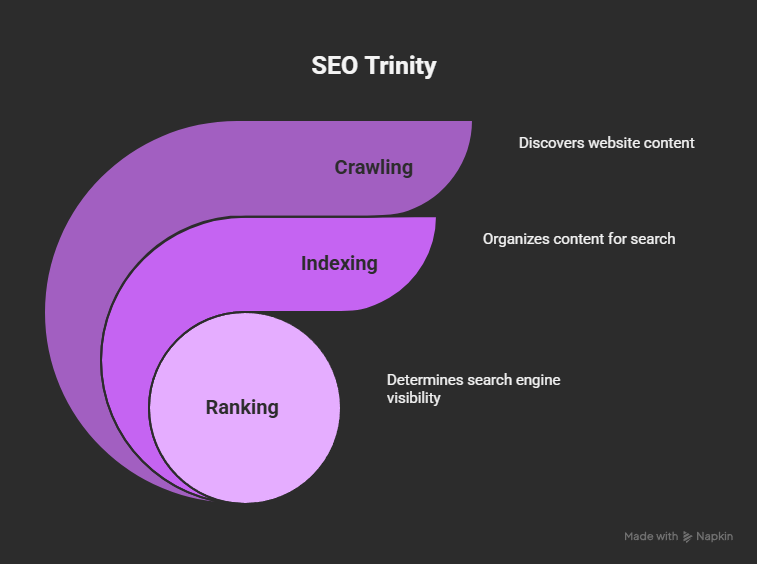
Crawl, Index, Rank—The SEO Trinity
- Crawling is how search engines discover content. Their bots (a.k.a. crawlers or spiders) scan your website to see what it’s all about.
- Indexing is the process of storing and organizing that information. If your page isn’t indexed, it’s basically invisible.
- Ranking is where the magic happens—Google evaluates your page based on hundreds of factors to decide if and where you appear on the search engine results page (SERP).
Organic vs Paid Results: The Real Estate Battle
On any SERP, you’ll see two kinds of listings:
- Paid results (ads) sit at the top, bought and bidding for attention.
- Organic results earn their place. These are the listings that SEO aims to conquer—and they get more trust, more clicks, and better long-term ROI.
Why Search Intent is Everything
Behind every search is a purpose: informational, navigational, transactional, or commercial. Understanding that intent—and creating content to match it—is what separates average SEO from exceptional SEO. Google’s goal is to serve intent, not just keywords. Your goal? Do it better than anyone else.
4. Core Components of SEO
SEO isn’t a one-trick pony. It’s a full-fledged ecosystem. Here’s what powers it:
4.1 Technical SEO: The Skeleton of Your Site
Before your content can shine, your site needs to function. Think of technical SEO as the architectural framework—the invisible but essential stuff that holds everything up.
- Accessibility & Crawlability: Make it easy for bots to explore your site.
- Page Speed: Users bounce from slow-loading pages faster than you can say “buffering.”
- Mobile-Friendliness: With mobile traffic dominating, your site needs to look and work beautifully on every screen.
- HTTPS: A secure website isn’t optional—it’s expected.
- Schema Markup: Add context to your content so Google understands it better—and can show rich results like FAQs, ratings, or events.
4.2 On-Page SEO: The Wordplay That Works
This is where content meets strategy. On-page SEO is about fine-tuning everything visible on your website to speak both to humans and algorithms.
- Keywords: Use them where it counts—titles, headings, and naturally within content.
- Meta Tags: Your title tag and meta description are your elevator pitch in the SERP.
- Headings (H1-H6): Guide both users and search engines through your content structure.
- Image Optimization: Alt text, file names, and compression = visual SEO power.
- Internal Linking: Build a web within your website that keeps users (and crawlers) exploring.
4.3 Off-Page SEO: Your Digital Street Cred
Even the best content needs backing. Off-page SEO is all about building authority—and it happens beyond your site.
- Backlinks: When high-quality sites link to yours, it’s like a vote of confidence.
- Guest Blogging & Outreach: Share your voice across platforms and earn valuable connections.
- Social Signals: While not a direct ranking factor, strong social presence amplifies visibility and can lead to more links and traffic.
- Brand Authority: Trust is the currency of the web—and off-page SEO is how you earn it.
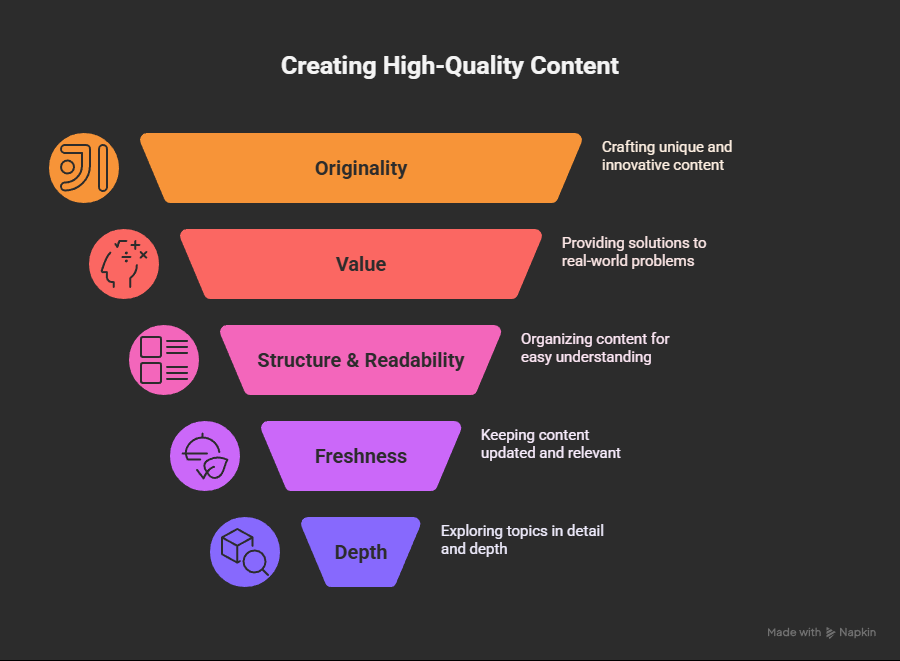
4.4 Content Quality: The King Everyone Talks About
Google doesn’t want just any content—it wants the best content. And so do your users.
- Originality: Say something new, or say it better.
- Value: Answer real questions, solve actual problems.
- Structure & Readability: Use headers, bullets, and short paragraphs. Make it scannable.
- Freshness: Keep your content updated and relevant—it signals to Google that you care.
- Depth: Go beyond the surface. Rich, detailed content performs better, especially in competitive niches.
5. Why SEO Matters in Digital Marketing
Let’s get one thing clear: if your website isn’t showing up on Google, it might as well not exist. SEO is what puts you on the map—digitally speaking.
Visibility = Qualified Traffic
The higher you rank, the more eyeballs land on your site. But not just any eyeballs—SEO drives users who are actively searching for what you offer. That means intent, interest, and a much higher chance of conversion.
Long-Term ROI > Flashy Paid Ads
Sure, paid ads can get you clicks—until your budget dries up. SEO, on the other hand, keeps giving. Invest in solid SEO today, and you’ll still be reaping the benefits months (even years) from now.
Builds Trust and Credibility
Ranking at the top of Google says something: we’re legit. Users trust search engines, and by extension, they trust sites that rank well. SEO isn’t just traffic—it’s reputation.
Covers the Entire Buyer’s Journey
From the moment someone Googles “what is [your product]” to when they search “buy [your product] online,” SEO can guide them through every stage—awareness, consideration, and decision.
SEO is Measurable (and Fixable)
With tools like Google Analytics, Search Console, and Semrush, you can track what’s working, what’s not, and how to pivot. This makes SEO a digital marketing channel that’s both strategic and data-driven.
6. SEO Best Practices That Actually Work
The Do’s of Smart SEO
- Do keyword research: Know what your audience is searching for—and why.
- Do on-page optimization: Craft titles, meta tags, headers, and URLs that work hard for you.
- Do create valuable content: Answer questions, solve problems, and keep it original.
- Do build high-quality backlinks: Focus on authority, not volume.
- Do optimize for mobile and speed: No one waits for a slow, clunky page.
- Do update your content: Freshness matters—for readers and rankings.
- Do use analytics: Let the data guide your SEO strategy.
The Don’ts (Avoid These Like a 2006 Pop-Up Ad)
- Don’t keyword stuff: It’s unnatural, annoying, and punished by Google.
- Don’t buy backlinks: Shady schemes can torpedo your site’s credibility.
- Don’t duplicate content: Your content should be as unique as your brand.
- Don’t ignore user experience: SEO isn’t just about bots—it’s about people.
- Don’t set it and forget it: SEO is a long game. Keep evolving.
Quick Pro Tips
- Use long-tail keywords to capture niche, high-conversion traffic.
- Write for humans first, algorithms second.
- Make your content skimmable: bullets, bolding, and headers are your friends.
- Optimize for featured snippets—they’re the new position #1.
- Audit your site quarterly to spot technical issues early.
- Follow trusted sources like Search Engine Journal, Moz, and Google Search Central.
7. Want to Learn SEO? Here’s Where to Start
Ready to level up? Whether you’re a total newbie or a marketer looking to sharpen your edge, these are the gold mines of SEO knowledge:
1. Google Search Central
The official word from the big G itself. Find technical guides, algorithm updates, and best practices straight from the source.
developers.google.com/search
2. Mailchimp SEO Glossary
Simple, jargon-free explanations of key SEO concepts. Great for beginners or anyone needing a quick refresh.
mailchimp.com/marketing-glossary/seo
3. Semrush Blog
Packed with actionable guides, expert tips, and SEO trends. If you’re serious about ranking, this is a daily read.
semrush.com/blog
4. Ahrefs Blog
Deep dives, data-backed insights, and practical SEO tutorials that don’t pull punches.
ahrefs.com/blog
5. Moz Beginner’s Guide to SEO
The OG of SEO learning. If you’re just starting out, Moz will walk you through everything from crawlability to content strategy.
moz.com/learn/seo
6. Backlinko by Brian Dean
Straightforward, no-fluff strategies with case studies and real results. His blog is SEO nerd paradise.
backlinko.com
7. Neil Patel Blog
A go-to for digital marketers. Offers SEO tutorials, tools, and trend analysis in digestible formats.
neilpatel.com
8. Reddit r/SEO
Want unfiltered advice from real-world SEOs? This is where the community spills what’s working (and what’s not).
reddit.com/r/SEO
Courses to Consider
- Shiksha SEO Courses – Curated list of beginner to advanced online courses from top platforms.
shiksha.com - Digital Marketing Institute – Offers certification courses designed for career-focused marketers.
digitalmarketinginstitute.com
8. Conclusion: SEO Is Not a Trend—It’s the Future
SEO isn’t a shiny new tool or a fleeting fad—it’s the backbone of how businesses are found online. In a world where Google answers billions of queries a day, visibility equals viability.
Let’s recap:
- SEO drives organic, high-intent traffic.
- It’s a long-term investment with measurable ROI.
- It supports every stage of the buyer’s journey.
- It builds credibility, authority, and trust.
- And best of all—it’s a skill you can learn, master, and evolve.
Whether you’re running a business, managing a brand, or building your personal platform, SEO is how you get seen.
So don’t wait. Start implementing what you know, explore the resources we shared, and commit to making your digital presence search-worthy.
🧠 Remember: The best time to start SEO was yesterday. The next best time? Right now.
9. Bonus Section: Your SEO Questions—Answered
Mini SEO FAQ:
❓ Is SEO dead?
Absolutely not. SEO is evolving—thanks to AI, voice search, and changing algorithms—but it’s more relevant than ever. The tactics change, but the need to rank? That’s here to stay.
⏳ How long does SEO take to show results?
SEO is a slow burn, not a viral sprint. Typically, it takes 3–6 months to see significant movement, depending on your niche, competition, and effort.
👨💻 Can I do SEO without a developer?
Yes—for the most part. Tools like WordPress, Wix, and Shopify offer plugins and settings that make SEO accessible. But for deep technical fixes (like site speed or schema markup), a dev can help speed things up.
📣 Let’s Take It Further
💌 Subscribe to get monthly SEO tips and Google updates—straight to your inbox.
🎓 Explore beginner-friendly SEO courses that actually teach what works.
💬 Talk to an SEO expert to review your website, fix technical issues, or kickstart your ranking strategy.
👉 No more hiding on page 2 of Google. Start your SEO journey today.